
The flamingos of Lake Nakuru National Park are among the most famous birds in Africa and have shaped the park’s global identity for decades. Although flamingo numbers fluctuate dramatically, Lake Nakuru remains one of the most important flamingo habitats in the East African Rift Valley, both ecologically and historically.
This expert guide is written for LakeNakuruPark.org as a supporting article for birds of Lake Nakuru National Park, providing scientific context, ecological nuance, and practical visitor insight that goes far beyond the typical “pink lake” narrative.
Flamingo Species Found at Lake Nakuru
Lake Nakuru supports two flamingo species, each with distinct ecological roles and behaviors.
Lesser Flamingo (Phoeniconaias minor)
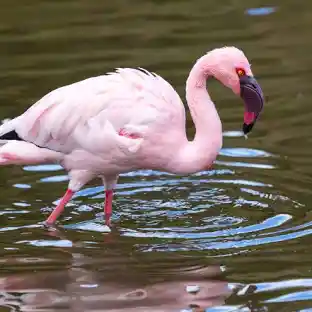
The Lesser flamingo is the species most closely associated with Lake Nakuru’s iconic pink coloration.
- Global status: Near Threatened
- Population: East Africa holds the world’s largest population
- Diet: Microscopic blue-green algae (Arthrospira / spirulina)
- Coloration: Deep pink due to carotenoid pigments in algae
When conditions are ideal, hundreds of thousands of lesser flamingos may congregate on Lake Nakuru.
Greater Flamingo (Phoenicopterus roseus)
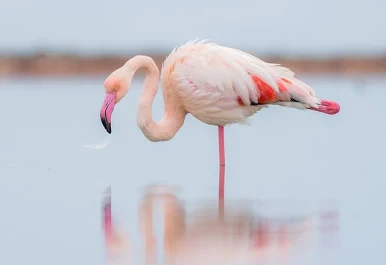
The Greater flamingo is larger, paler, and more widely distributed.
- Global status: Least Concern
- Diet: Aquatic invertebrates, small crustaceans, mollusks
- Behavior: Often feeds along shorelines rather than open water
Greater flamingos are usually present in smaller but more stable numbers than lesser flamingos.
Expert Comparison: Lesser Flamingo vs Greater Flamingo (Lake Nakuru Context)
The table below provides an expert-level comparison of the two flamingo species found at Lake Nakuru National Park, highlighting ecological, behavioral, and conservation differences that are especially relevant for birders and researchers.
| Aspect | Lesser flamingo | Greater flamingo |
|---|---|---|
| Average height | 80–90 cm | 110–150 cm |
| Average weight | 2–2.5 kg | 3.5–4 kg |
| Plumage color | Deep pink to crimson (intensity varies with diet) | Pale pink to white with pink highlights |
| Bill shape | Deep, sharply down-curved bill specialized for algae | Shallower, less curved bill suited for invertebrates |
| Primary diet | Blue-green algae (Arthrospira / spirulina) | Aquatic invertebrates, crustaceans, mollusks |
| Feeding depth | Very shallow soda lake surfaces | Shallow shorelines and lagoons |
| Feeding behavior | Highly specialized filter feeder; feeds continuously | More flexible feeder; slower, deliberate feeding |
| Habitat preference | Alkaline soda lakes of the Rift Valley | Wide range of wetlands, lagoons, and salt pans |
| Nomadism | Extremely nomadic; moves rapidly between Rift Valley lakes | Semi-nomadic; movements more gradual and predictable |
| Typical group size | Thousands to hundreds of thousands | Tens to a few hundred |
| Historical presence at Lake Nakuru | Responsible for “pink lake” phenomenon | Present in smaller but more stable numbers |
| Sensitivity to water chemistry | Very high (dependent on algae blooms) | Moderate (tolerates broader conditions) |
| Breeding sites | Highly restricted (mainly Lake Natron, Tanzania) | More widespread breeding range |
| Global conservation status | Near Threatened | Least Concern |
| Indicator value | Sensitive indicator of soda-lake health | Indicator of general wetland stability |
Expert Interpretation for Lake Nakuru
- Lesser flamingos are the species that made Lake Nakuru world-famous, but they are also the most sensitive to changes in salinity, water depth, and algae composition. Their presence or absence reflects fine-scale chemical shifts in the lake.
- Greater flamingos are less visually dramatic but ecologically more resilient, explaining why they may still be present when lesser flamingos are absent.
- From a conservation perspective, Lake Nakuru’s role is more critical for lesser flamingos, even during years when they are not present in large numbers.
LakeNakuruPark.org takeaway:
If Lake Nakuru appears “less pink,” it does not mean flamingos are declining. It means the system is behaving as a dynamic Rift Valley soda-lake network, with lesser and greater flamingos responding differently based on their ecological specializations.
Why Lake Nakuru Attracts Flamingos
Lake Nakuru is a shallow alkaline soda lake, part of the eastern arm of the Great Rift Valley. Its chemistry historically created ideal feeding conditions for flamingos.
Key factors include:
- High alkalinity and salinity
- Shallow depth allowing efficient filter feeding
- Periodic blooms of blue-green algae
Flamingos are highly specialized feeders, and Lake Nakuru has periodically met their exact nutritional requirements.
Flamingo Numbers: Why They Fluctuate Dramatically
One of the most misunderstood aspects of Lake Nakuru is flamingo presence. Flamingos are not resident birds; they are nomadic specialists that move between Rift Valley lakes in response to food availability.
Important expert insights:
- Flamingos track algae chemistry, not park boundaries
- Small changes in salinity can trigger mass departures
- Lakes Nakuru, Bogoria, Elementaita, and Natron function as a connected system
Flamingo absence at Lake Nakuru does not indicate ecosystem collapse—it reflects normal Rift Valley dynamics.
Historical Context: The “Pink Lake” Era
During the late 20th century, Lake Nakuru regularly supported over one million lesser flamingos, creating the iconic “pink horizon” that defined Kenya’s bird tourism.
However:
- Rising water levels in the 2010s diluted alkalinity
- Shoreline vegetation expanded into former feeding zones
- Algal composition shifted
These changes permanently altered flamingo usage patterns—but did not eliminate Lake Nakuru’s importance.
Flamingos and Climate Variability
Flamingos are among the most climate-sensitive birds in East Africa.
Key drivers affecting Lake Nakuru flamingos:
- Increased rainfall altering salinity
- Flooding changing lake depth
- Regional climate oscillations across the Rift Valley
As a result, flamingo movements today are more unpredictable but ecologically normal.
Where to See Flamingos Inside Lake Nakuru National Park
When flamingos are present, the best viewing areas include:
- Eastern shoreline circuits
- Southern lake margins
- Elevated viewpoints such as Baboon Cliff for panoramic views
Visibility varies with water levels; binoculars enhance the experience.
Flamingos vs Other Birds at Lake Nakuru
While flamingos draw attention, Lake Nakuru supports over 400 bird species, making it one of Kenya’s top birding destinations even during low flamingo periods.
Common associates include:
- Great white pelicans
- African spoonbills
- Pied avocets
- African fish eagles
Flamingos should be understood as part of a broader wetland–woodland bird system, not the sole attraction.
Conservation Significance of Lake Nakuru for Flamingos
Lake Nakuru plays a supporting role in the survival of East Africa’s flamingo populations by:
- Acting as a seasonal feeding site
- Reducing pressure on other soda lakes
- Providing refuge during certain hydrological phases
The park’s protection under the Kenya Wildlife Service ensures long-term habitat security even as conditions fluctuate.
Best Time to See Flamingos at Lake Nakuru
There is no guaranteed season, but general patterns apply:
- Flamingos are more likely during stable dry periods
- Numbers may increase after algae blooms
- Sightings vary year to year
Visitors should approach Lake Nakuru with ecological curiosity rather than fixed expectations.
Photography Tips for Flamingos at Lake Nakuru
For photographers:
- Early morning offers softer light and calmer water
- Elevated viewpoints help capture scale
- Telephoto lenses are useful during high water levels
- Wide-angle lenses excel during mass congregations
Dust and glare can be factors in dry months.
Why Flamingos Still Matter at Lake Nakuru
Even during periods of low numbers, flamingos remain ecologically central to Lake Nakuru’s identity.
They symbolize:
- The dynamic nature of Rift Valley ecosystems
- The interconnectedness of East Africa’s soda lakes
- The importance of adaptive conservation
LakeNakuruPark.org Expert Takeaway
Lake Nakuru’s flamingos are not a static attraction—they are biological indicators of water chemistry, climate variability, and ecosystem health across the entire Rift Valley.
Understanding flamingos at Lake Nakuru means accepting fluctuation as success, movement as survival, and change as part of a living system.
For birders, conservationists, and informed travelers, Lake Nakuru remains one of Africa’s most instructive flamingo landscapes, whether the lake is pink—or quietly preparing for the next great return.